


 Long before the first computer and the idea of the electronic medical record, healthcare providers from hospitals to primary physicians have been methodically documenting the health and care for their patients using medical records.
Today, advancements in technology have allowed for advancements in managing medical records by electronic means.
With electronic health records now able to be stored and managed online, medical practices are also now able to function as paperless offices, in turn helping to streamline their everyday processes and maximize work efficiency.
Click on any of the titles below to jump to the section that you would like to learn more about, or just scroll down to read this white paper in its entirety.
Table Of Contents
Introduction
Medical Records: Moving from Paper to Electronic Format
Today’s Types of Electronic Medical Records
Healthcare Laws and Regulations Impacting Electronic Health Records
Convert to Being an Electronic Healthcare Provider
Conclusion
Introduction
 The entire healthcare industry has seen an effective transformation in recent years. With laws like HIPAA and the Affordable Care Act in place to establish standards for protecting electronic health records and encourage their implementation, the industry has begun to shift toward using electronic medical records as its primary method of managing patient health.
In order to make the transition from paper-based health management to electronic health records, healthcare providers are able to make use of specialized medical record scanning and storage services for converting to electronic health records.
In this in-depth white paper, we cover the full spectrum of electronic medical records and their impact on the healthcare industry—beginning with what exactly electronic medical records are, then covering their various types, and finally finishing with how you can begin to convert your own medical practice to a paperless office by scanning and converting medical records to electronic format.
Medical Records: Moving from Paper to Electronic Format
 Although the systematic documentation of patients’ health histories and care over time by healthcare providers was long done by means of paper-based medical records, advances in digital technologies and storage capabilities have led to the development of what are known as electronic health records systems (EHRs) in the healthcare industry.
Often used interchangeably with the similar term electronic medical record systems (EMR), electronic health records refer to a single medical practice’s methodical collection of patient health information stored in digital format.
With these EHRs, healthcare providers are now able to more easily share and access their medical records through network-connected, enterprise-wide record management platforms.
Benefits of Electronic Health Records
Besides their increased usability and practicality for providers who implement EHRs, these modern medical records provide for numerous other advantages for healthcare practices.
Among others, top benefits include cutting down the chances of data replication or inaccuracies since there is only a single medical record, as well as eliminating the need to track down and locate past patient records prior to adding any new changes.
Given these advantages—which are particularly relevant for healthcare providers working on a large scale like hospitals, who handle the medical records of hundreds of patients each day—insurance companies, Federal and state governments, and even large medical institutions have begun to heavily promote the adoption and implementation of electronic medical records since 2010.
Recent Adoption and Implementation of EHRs
For an idea of the role EHRs play in the healthcare industry today, when the Health Information Technology for Economic and Clinical Health (HITECH) Act was enacted as part of the American Recovery and Reinvestment Act of 2009, the US Congress specifically looked at EHRs/EMRs versus paper medical records.
In order to encourage the widespread use and adoption of electronic health records, the law was designed to include incentives and penalties for healthcare providers depending on which system of medical record management the provider was using by 2015.
According to HITECH, practices using EHRs could receive up to $44,000 per physician for covered Medicare patients, and up to $65,000 over six years under Medicaid—whereas for healthcare providers who by 2015 had failed to implement electronic health records, practices would receive decreased Medicare and Medicaid reimbursements for treating covered patients.
While the initial transition from paper medical records to EHRs was not overnight, over time their adoption and use has become more widespread. With increasing numbers of healthcare providers now using EHRs however, many patients are able to receive a better-coordinated and higher quality of care.
Since anyone working in a medical practice can access and view a patient’s full medical record, this makes for smoother transitions between physicians and care settings, better care in emergency situations, and improved physician prevention by providing all test results and notes over time for evidence-based patient recommendations.
Today’s Types of Electronic Medical Records
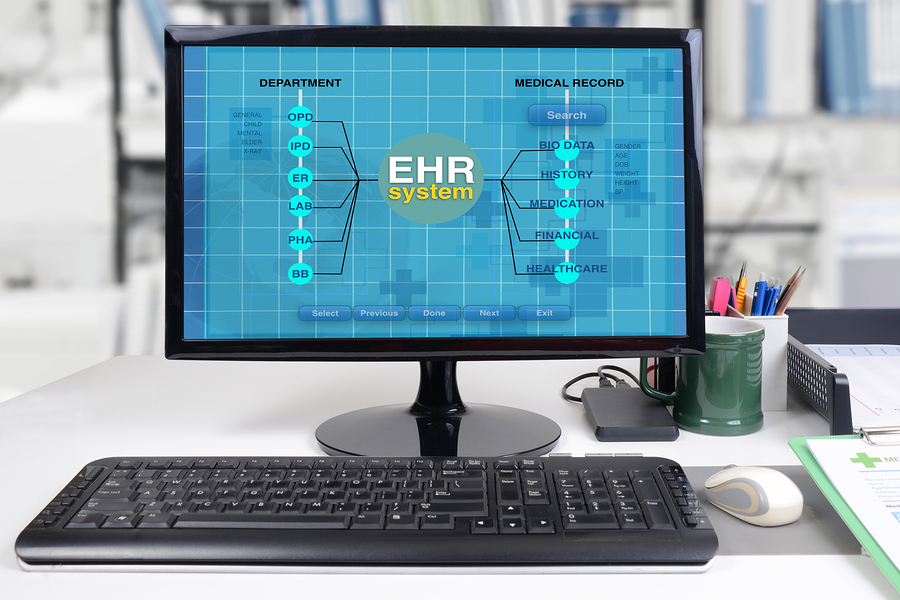 When it comes to healthcare, patient information, and medical records, there are numerous key terms and abbreviations to be aware of, as many—like EMR and EHR, or PII, PHI, and PHR—are similar and can be easily confused with one another.
To get the easy ones out of the way first, PII, which stands for personally identifiable information, and PHI, which stands for protected health information, are typically what is found inside medical records.
- Personally identifiable information (PII) is information which can be used to identify, locate, or contact an individual. Examples include name, address, phone number, birthdate, etc.
- Protected Health Information (PHI) is information regarding an individual’s health status, health care, or payment of healthcare. PHI includes information such as names, medical record numbers, health insurance numbers, etc.
The privacy of a patient’s PII and PHI is protected by laws like the Health Insurance Portability and Accountability Act (HIPAA), which govern the privacy and security of the medical records where PII and PHI is stored.
Today, there are essentially two different types of digital medical records used in the healthcare industry that contain patient PII and PHI—electronic health records/electronic medical records (used interchangeably), and personal health records (PHRs).
Electronic Health Records (EHRs) and Electronic Medical Records (EMRs)
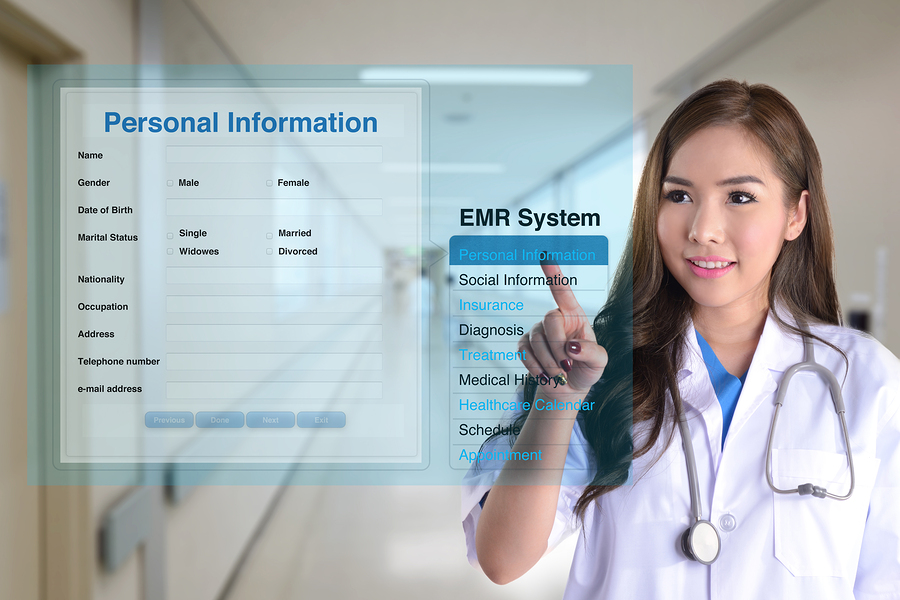 First and foremost, it is important to understand that the terms electronic medical record (EMR) and electronic health record (EHR) are essentially one and the same.
In comparison to personal health records (PHR)—which are designed for patient use—an EHR is a medical record which is built and maintained within medical practices or institutions, including hospitals, doctors’ offices, and other clinics.
Because they are managed by healthcare providers, they are intended for use within the healthcare industry—whether to give physicians within the practice access to a patient’s medical records, or to provide easier medical record distribution throughout facilities like insurers and specialist’s offices.
With the help of this advancement in managing and organizing medical records for the healthcare industry, an individual patient’s own ability to coordinate their health management becomes easier, as the health facilities and professionals who assist in their care are better able to coordinate amongst themselves.
EHRs have helped to provide new technical features that in past days of paper medical records would have been unfathomable, including:
- Monitoring care like prescribed medications over time, helping to track outcomes and side-effects.
- Additional trigger warnings and appointment reminders to prevent mistakes and keep care on the right path.
- Send and receive electronic doctor’s orders, reports, and test results nearly instantaneously.
- Minimized processing times and a more accurate billing system, as electronics reduce chances of poor legibility or mistakes in calculations.
- Digitally formatted medical information vastly increasing the scale of medical research and advancement, as databased health information can be sourced (with all patient PII and PHI omitted) and used for a wider pool of resources during medical research and testing.
Electronic health records have helped to maximize both the efficiency and overall care capability of the healthcare industry, offsetting the costs of system implementation with the ability to move patients more quickly through whatever form of care they require as form of return on investment.
Personal Health Records (PHRs)
 In contrast to more widely used electronic health records (EHRs), which are managed by healthcare providers like physicians, a personal health record (PHR) is a medical record designed for patient use.
While EHRs only contain a single healthcare provider’s individual documentation of the patient’s health history, PHRs span the entirety of their health history across all providers.
Often available by means of third-party providers, the goal of PHRs is to provide patients online access to complete and accurate summaries of their health status and care.
Although patients are not required to store their health information in a PHR, healthcare providers are legally required to provide patients access to their health histories via a PHR.
The benefits and advantages to using a PHR for patients include, but are not limited to:
- Access to the entirety of a patient’s medical records in a single location, rather than records being stored away in the filing cabinets of different doctors the patient sees.
- Easy communication between patient and doctor via PHR email systems, which provide opportunity for doctors to answer questions, concerns, or respond to unusual symptoms without the patient needing an appointment.
- Continuous health data for doctors to add to their own EHRs, as patients can submit their own information to the physician’s office to support more informed decision-making.
- Coordinated care between third-parties like doctors, billing facilities, and pharmacies, as the patient’s involvement removes communication barriers between these providers and closes the gaps between the information each has and needs in order to provide proper treatment.
While the design of personal health records primarily offers benefits to patients themselves, the PHR has certainly helped to also streamline the day-to-day functions of medical practices as well.
With the ability to funnel basic patient-doctor communications through a PHR rather than by making an appointment, there are more open appointments available to patients, physicians can quickly upload lab results and send prescription refill requests online, and constantly changing health statuses can be monitored and managed in real-time.
Healthcare Laws and Regulations Impacting Electronic Health Records
While establishing a record management system is certainly an initial step in the right direction, a disorganized or poorly managed system for your business documents can lead to a variety of issues.
Ranging from remaining up-to-date and compliant with all recordkeeping regulations for your industry to keeping your company security risks in-check, here are some of the chief-most issues that record management systems currently are facing:
Legal and Regulatory Noncompliance
 While the potential and capability of electronic health records has played a major role in the advancement of managing medical records and patient care, the transition from paper records to network-based electronic health records that are stored in a single location has also opened up new avenues for concern over privacy risks.
Given the number of online data breaches in recent years and the fact that EHRs exchanged and stored using the internet are subject to the same security threats as any other data transaction over the internet, numerous laws have been enacted and amended during the past several decades to address the security of electronic medical records, such as HIPAA and the Affordable Care Act.
Health Insurance Portability and Accountability Act (HIPAA)
The Health Insurance Portability and Accountability Act was passed in 1996 in order to establish standards for access, authentication, storage, and transmittal of both paper and electronic medical records.
Although regulations for both formats of medical records are laid out by HIPAA, today the restrictions for EHRs are much tighter in an effort to better manage electronic threats to patient privacy.
Information that is covered and protected by HIPAA is the patient PHI that electronic health records contain, and under this law, the disclosure of and access to this sensitive health information by third parties is fairly limited.
In order to enforce these regulations, the Department of Health and Human Services doles out heavy fines for HIPAA violations resulting in data breaches (with some exceeding heights of $1.5 million or greater), and even goes as far as to manage an online “Wall of Shame”, listing all the healthcare providers whose HIPAA violations have resulted in data breaches affecting more than 500 individuals.
The Patient Protection and Affordable Care Act (PPACA)
In 2010, the Patient Protection and Affordable Care Act—also known simply as just the Affordable Care Act—was enacted, marking the most significant overhaul of regulations for the healthcare industry since the introduction of Medicare and Medicaid in 1965.
In essence, the fundamental goal of passing the Affordable Care Act was to begin an industry-wide transition for physicians and hospitals toward a healthcare industry that is more financially, technologically, and clinically evolved, helping to maximize quality of patient care while lowering costs to providers.
With the Affordable Care Act, structural changes were introduced with the intent to shift the healthcare industry toward placing higher priority on quality, rather than quantity.
Among the chief examples of this change were the introductions of Federal incentives for implementing EHRs over paper-based medical records, as providers have seen with the 2015 EHR deadline for Medicare and Medicaid reimbursements.
Although some healthcare laws like HIPAA introduced penalties while others like the Affordable Care Act brought incentives, healthcare legislation has either way begun to shift its attention towards electronic medical records in an effort to keep up with industry trends, signifying the ever-growing role that EHRs play in the healthcare industry today.
Convert Your Medical Practice to Being an Electronic Health Provider
With the growing technological capabilities of electronic health records combined with healthcare laws like the Affordable Care Act helping to also ease the transition, converting from paper medical records to paperless EHRs has become the ideal solution for medical practices to better streamline their management of medical records and improve the efficiency of day-to-day functions.
When making the transition to a paperless environment for electronic health records, there typically is a two-step conversion process:
Scanning Medical Records
 For medical practices still using paper medical records, the first step of the conversion to EHRs begins with medical record scanning services.
Scanning medical records helps to maintain complete and secure medical records by creating a copied image of the scanned medical record in digital format.
Because these medical records are chock-full of patient PHI, which is the responsibility of healthcare providers to protect at all costs, Record Nations places special emphasis on security with our medical record scanning services.
Each of the scanning providers in our pre-screened network meet all industry standards for scanning security—including compliance with HIPAA and HITECH—and we even offer full-service scanning options either at secure offsite scanning facilities or at your location for your convenience.
Storing Medical Records in an Electronic Document Management System (DMS)
 After scanning and converting the entirety of your practice’s medical records to digital formats, the next step is to import these electronic health records into an electronic document management system (DMS).
Using a DMS, healthcare providers can more effectively manage and organize their newly electronic medical records across an enterprise-wide system.
Electronic document management systems are the true structure of healthcare providers using electronic health records. This is where the documents are stored online in one secure location, allowing medical practices to view and edit a patient’s full medical record in a single place.
At Record Nations, we help to connect healthcare providers with the ideal DMS for storing and managing their electronic health records. Whether you run a small medical practice of several physicians, or a large hospital filled with doctors from all ends of the specialist spectrum, our medical record storage services make the transition toward a paperless system for your EHRs a smooth one.
Conclusion
 By converting paper medical records to digital formats and storing them in an electronic health record system (EHR) to create a paperless medical practice, healthcare providers are able to in turn streamline the overall function of their offices.
With benefits ranging from improved accessibility to patient records, to minimized storage costs and even PHR systems to help simplify patient-doctor communications, an increasing number of healthcare providers are turning to electronic health records as their primary method of managing medical records.
If you are considering implementing EHRs into your medical practice, be sure to keep these final few considerations in mind as well:
- Storage Requirements – With paper medical records, physicians often keep a personal archive of notes in addition to the office archive of records. Since the amount of storage required for these paper records grows at a rate of about 20-25% each year, many companies instead turn to paperless EHRs to meet their medical record storage needs.
- Storage Capabilities (and Costs) – A storage device for EHRs like an 80 GB hard drive can hold 2.7 million documents and costs only $120. In order to store 2.7 million paper documents would require 68 four-drawer file cabinets, and the cost of one cabinet itself is more than $120—reaffirming the potential for EHRs to lower the cost of storage for providers.
- Disaster Recovery – Paperless EHR management systems also provide for disaster recovery in the event your offices are damaged by fire or flood. With data recovery and backup support services, your medical practice is able to quickly get back on its feet in the event of an unforeseen catastrophe.
Get Free, No-Obligation Quotes on Medical Records Scanning and Storage Services Near Your Practice
Considering the volume of sensitive medical records that healthcare providers must handle on a daily basis alone, making the transition to using paperless electronic health records can make a major impact on the overall efficiency, productivity, and organization of a medical practice.
At Record Nations, we recognize the critical importance of maintaining the quality, accuracy, and consistency of your patients’ medical records when converting them to EHRs, and to meet these needs, we partner with a nationwide network of full-service medical records scanning and storage service providers who can help to scan and index any volume of medical records quickly and within budget.
To get started with finding the ideal medical records scanning and electronic health records system to store your digital medical records, just give us a call at (866) 385-3706, or simply fill out the form to your right to request free quotes on medical records scanning and storage services today!
Additional Resources
The Cost of Medical Records Scanning
One of the first questions medical practices and healthcare providers will often ask before beginning a medical records scanning project is how much their project will cost. Although the final cost of each project will fluctuate slightly depending on its size and your service area, in this article we provide a breakdown of the medical record scanning process to help you get an estimate for your project.
Medical Records Retention Times & How to Store Them
Healthcare is one of the most tightly regulated industries in the US, and in order to ensure that you are compliant with all laws and regulations impacting medical records, it’s always a good idea to be up-to-date on medical record retention guidelines. Here we provide a helpful list of retention types for the most common types of medical records, and offer helpful tips and strategies for storing them during their retention period.
Five Benefits of Electronic Medical Record Software
Managing and maintaining patient medical records is critical to successfully running medical practices both large and small. In this article, we cover a few of the top benefits of using electronic medical record software to manage your medical records in a paperless environment, including ease of access, improved patient care, and especially less clutter around your offices.