


You may feel many emotions when your medical practice announces its closure, and the closing process also may lead to logistical hurdles as you prepare for the final date of care. After years of building your practice, managing care, and establishing relationships with patients, your staff, and vendors, no one tells you how to suddenly let it all go. Yet, suddenly it’s time to close your doors, and hang up your stethoscope one last time.
Whether you are retiring, relocating, or transitioning to a different career path, the process requires careful planning and consideration to ensure a smooth and ethical closure. In this blog post, we will guide you through the essential steps to close a medical practice.

Steps To Take When Closing Your Medical Practice
From communicating the closure to your patients to creating an official closing timeline, here are the seven steps you need to take when you’re ready to officially shutter your practice.
1. Communicate the Closure Date to Patients
Notify patients at least a few months before your practice officially closes, providing information about transferring medical records, the reason for the closure, and how they can continue care with another provider. All details should be shared through multiple channels, including an official letter, an email, and in-person announcements (when possible). If the practice has social media accounts, consider adding a post about the closure.
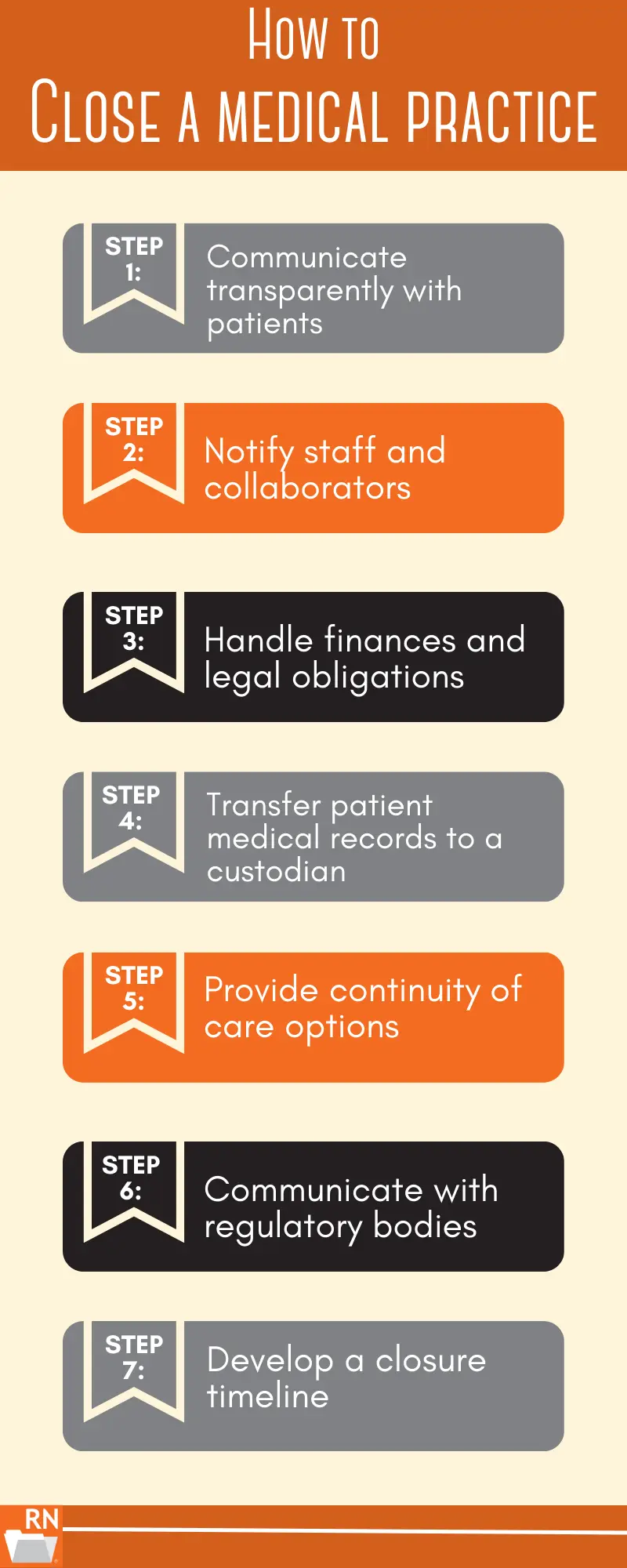
2. Notify Staff and Collaborators about the Closure
Inform your staff, collaborators, and any other stakeholders about the impending closure as soon as possible. Work closely with them to develop a plan for transitioning patient care and support their career transitions. Address any concerns they may have and ensure a smooth handover of responsibilities.
3. Handle All Financial and Legal Obligations
Finalize and settle all financial and legal obligations associated with closing a medical practice, including settling outstanding bills, notifying insurance companies, and terminating lease agreements. Consult with a legal professional to ensure that you comply with all relevant regulations and contractual obligations.
4. Use a Medical Custodian When Transferring Patient Medical Records
Patients have a right to access their records, and it’s your responsibility to ensure a secure and efficient records transfer process. Partner with a reputable medical records custodian who can manage the transfer securely and in compliance with healthcare privacy regulations.
A medical records custodian plays a crucial role in managing and maintaining the confidentiality, accessibility, and security of patient medical records. Their responsibilities extend beyond the closure of a medical practice and encompass various aspects related to handling healthcare information.
5. Provide Continuity of Care Options to Patients
Assist patients in finding alternative healthcare providers for their ongoing medical needs by offering recommendations, facilitating referrals, and providing a list of nearby healthcare facilities where they can continue receiving quality care. Ensuring continuity of care is crucial for maintaining patient trust and well-being. It’s important to give existing patients choices for their future care.
6. Communicate Your Medical Practice Closure to Regulatory Bodies
Notify relevant regulatory bodies about the closure of your practice, including state medical boards and licensing authorities. Comply with any reporting requirements and ensure you are in good standing with all professional regulations.
7. Develop a Closure Timeline for Your Practice
Create a detailed timeline outlining the closure process for your practice, including key closure milestones and deadlines. This will help you stay organized and ensure that all necessary steps are taken on time. The table below highlights a hypothetical closure timeline:
| Timeframe Before Closure | Action to Take | Why It Matters |
| 120–90 days out | Notify your malpractice carrier, review lease and vendor contracts, and confirm your state’s specific patient-notice requirement | You need to get ahead of all legal issues. |
| 90–60 days out | Send written notice to active patients by mail and email, and post a closure notice in the office. All notices should include the date of closure and how records will be handled/transferred. | You need to ensure patients hear the news from the source. |
| 60–30 days out | Work with a medical records custodian to manage secure transfer, retention, and patient-directed release of records. You also need to notify your state medical board and any relevant licensing bodies of the practice closure. | You help manage the release of medical records in a secure, structured manner. |
| 30 days out | This is the time to finalize referrals for patient continuity of care, close out billing and insurance obligations, and confirm the final paycheck and benefits timelines for staff. | You ensure everyone (patients and staff) are comfortable with the next steps. |
| Closure day | Complete final record transfer to the custodian, deactivate EHR access per your data-security policy, and confirm all regulatory notices were received. | You close your practice without any loose ends. |
| Post-closure | Retain a certificate of custody/destruction record from your provider and keep a copy of your notification log for the state-mandated retention period. | Your certificate of custody and notification logs serve as proof of retention/destruction. |
Confidently Close Your Medical Practice with Record Nations
Closing a medical practice requires careful planning, communication, and adherence to legal and ethical standards. By following these steps, you can ensure a smooth transition for both your patients and your professional network.
If you need a medical records custodian to manage the transfer of patient records securely, Record Nations is here to help. Our experienced team prioritizes the confidentiality and security of medical records, ensuring a seamless transition for both you and your patients. Contact us today at (866) 385-3706 or fill out the form to discuss your specific needs. We will help guide you through this crucial aspect of closing your practice.
FAQ
Patients should be notified at least 60 – 90 days before the closure; however, your state may have a specific guideline. Notices should be via mail, email, and posted in the office; detail the date of the official closure, how records will be transferred, and provide recommendations to ensure continuity of care.
When a medical practice closes, patient records may be managed by a custodian; this individual ensures the secure storage, HIPAA-compliant release, or appropriate destruction of medical records.
Yes, notifying your state medical board (as well your malpractice insurance provider and the hospitals you serve) is one of the early steps in the closure process. Confirm notification requirements with your state board, ensuring you are in compliance.
Yes, patients have the right to request their records after the closure; this is one of the key reasons why practices should work with a custodian. A medical records custodian ensures that all requests are handled in a timely manner, so patients can transfer their records to a new provider. Make sure you include your custodian’s information in correspondence to your patients.