

Too much paper around the house can create unnecessary clutter and anxiety. That’s why it’s extremely important to keep your documents and records organized.
They hold some of the most valuable and private information, including social security numbers, health and financial information, and property records. When it comes to your personal information, preventing fraud and data breaches is an important consideration.
When you create a management system for your own records, you will know exactly where everything is and will able to find it quickly. It’s also unlikely that anything will be misplaced, lost, or end up in the wrong hands. You’ll also have an easy way locate important documents quickly, especially in an emergency situation.
Here are some steps you can take to make sure your personal or professional records are organized, categorized, and easy to find.
Five Ways to Help Get Your Records More Organized
1) Categorize Your Records
There are a number of systems you can use to manage your records. Before creating your filing system, it’s important to sort all your existing records to determine if you should keep them or shred them.
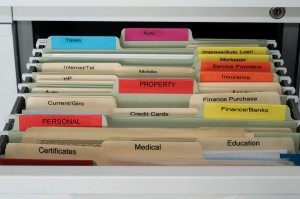
The next step is to gather everything that you determined you want to or have to keep and separate them into piles based on categories. You can select things that make the most sense for you, but the most common categories are financial records, medical records, property records, and personal documents.
Each set of documents can be organized and sorted into categories and subcategories. For example, financial records can be sorted by years, accounts, or amounts owed.
2) Check Your Records For Personally Identifiable Information
Once you have everything categorized, you should check each item for personally identifiable information (PII), like social security numbers, account numbers, and credit card numbers. To ensure your safety from identity thieves, if you’re not going to save it, then shred these sensitive records.
3) Sort and Organize Everything

Keep your information sorted to make it easier to figure out what needs to still be taken care of, and what needs to be filed. Sort your bills into piles that indicate which ones have been paid and ones that still need to be paid. If you’re ambitious, you could separate them by their due dates with the bills that need to be paid on top of the pile or front of a folder.
Keeping the most recent records in the front of each folder will help you keep them sorted by date without having to go back in and rearrange them. Documents that fall into a miscellaneous category can still be divided into general piles like “To File,” “Shred,” or “Throw Away.”
Medical records could be organized by the family member it pertains to while property documents can be arranged by location or value. Organized financial records will alleviate stress and headaches since they will be in one place and will only serve to benefit you in the long run.
4) Find a Place to Store Your Files And Their Backups
Now that you have separated, organized, and categorized your files, you need to find a safe place to store them. A filing cabinet, large binders, or fireproof boxes are a few good options for storing large amounts of records.
Keep extra copies of the most important documents in a different place in the event that the original gets misplaced. For added security, you can keep an electronic copy of all of your documents as a back-up.
Converting your documents and files will eliminate paper and free up space in the filing cabinet.
When setting up your organizational system make sure that it is easy to understand so that if anyone needs to find something they will be able to locate it quickly and easily. If you choose to use file folders or dividers, label the tops with categories and subcategories.
You might want to keep a log that tells others what you have done so far, a brief synopsis on how the documents are organized, and what still needs to be done. This will keep things straight and allow you to make progress to improve your file system.
5) Document Your System And Maintain It
Once you get your records organized, the last step is to keep it free of clutter and, well, organized. In order to keep the documents organized and in the right place, be sure to file any new bills or records in the system immediately. Well organized records can save time and reduce the stress of finding misplaced documents when you need them in a hurry.
Get Free Quotes on Records Storage Today
Information governance is an ever changing field as federal and state laws require more retention and faster discovery. Our experts will help you maintain your records storage needs regardless of format.
We can help you manage your hard-copy records, and even guide you through the transition to a paperless workflow. Record Nations has been connecting individuals and businesses with document scanning, secure storage, and other records management solutions for over a decade. Let us help you find the right document management solution for you.
To get started, fill out the form on the page, or give us a call at (866) 385-3706. Within minutes, you’ll have several companies in your area to choose from.