


With the burdens that physical medical records can put on a practice, many healthcare providers have been digitizing their medical records to help reduce costs and enhance their patient’s care. However, when thousands of documents and data-related files need to be digitized, it can be complex and time-consuming.
One of the best ways medical practices digitize medical records is by outsourcing to a third-party scanning service to process and protect their data from identity theft and lawsuits. Through outsourcing, digitizing medical records can become more effective and safer for everyone involved.
Here’s everything you should know about digitalization, how it can help manage medical record systems, and why outsourcing can benefit your practice.
How Does Digitization Work?
Digitization refers to the process of converting data to a digital format. Throughout this process, the data isn’t changed, but rather encoded into a digital file. It automates the process and helps make the data more accessible on digital devices like computers, mobile phones, and tablets. It’s about moving processes, systems, and business models to a digital format for many businesses. In the case of medical practices, it allows them the ability to manage data and make better business decisions for patient care.
Through digitizing, businesses can plan and prep their data to handle procedures more effectively and save time. Whether you choose to scan your documents yourself or hire a professional document scanning service, here’s a quick outline of how it’s done.

Identifying Records
Identifying the records you need to convert digitally matters, so it’s important to try to sort and organize them according to the content of the data, time relevant to its retention rate, and importance. Make sure to separate these documents and organize them effectively, especially those containing sensitive information.
Preparing Records
Once you’ve identified the documents you need scanned, prepare the records by cleaning and further organizing them, making sure they are free from paper clips, pins, and other articles.
Scan With Tools
Many apps and software programs can scan these files, but it’s key in this process. Many professional scanning services are equipped with the best systems to convert documents into the file format of your choice. One aspect to note about scanning is that it can be encrypted with custom scanning codes for converting and protecting sets of documents.
Decide on Format
Any written documents, photos, and other document types can be converted to digital formats. Some of the most popular formats include PDF, Excel sheets, and JPEG. These file formats are more easily transferred and stored and offer better data security.
Storage Media Options
As a business, your storage options are most important, especially for collecting and protecting hundreds of patient data. In these cases, cloud storage and internal server options are most optimal for protecting your data from identity theft and data breaches, especially when paired with an electronic document management system.
Why Providers Should Digitize Medical Records
Data breaches are becoming more prominent in the healthcare industry, and keeping patient information safe and accessible should always be a top priority. When you work to transfer paper documents to electronic files, you can streamline your operations and focus on providing quality care to your patients. It’s a process that’s beneficial for a number of reasons.
Improved Accessibility
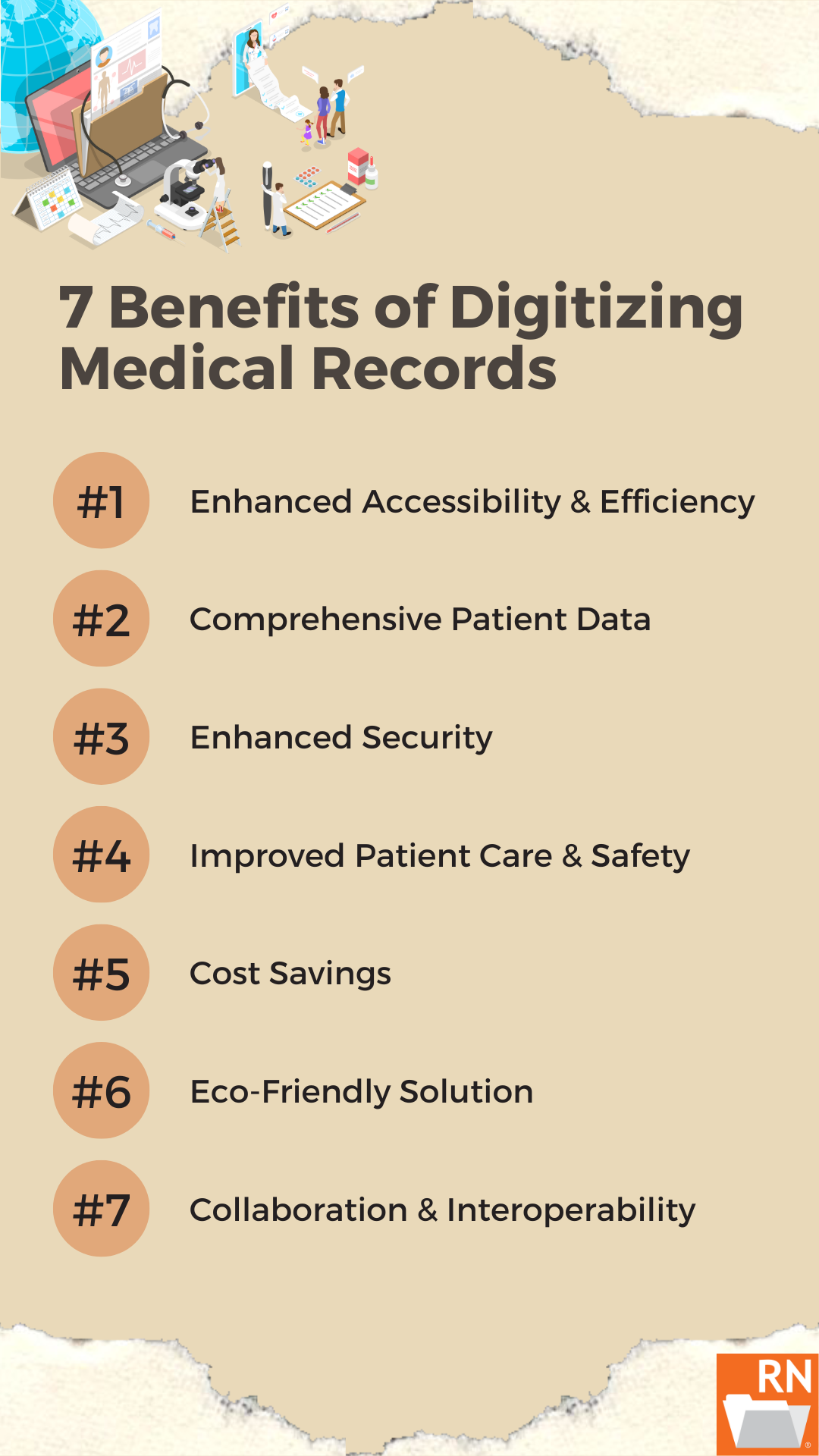
Through digitized medical records, authorized physicians and healthcare staff can access patient information instantly, providing quicker diagnoses and more efficient care delivery.
This process also includes administrative tasks, allowing appointment scheduling, billing, and insurance claims processing to be more efficient and helps reduce the amount of paper involved.
Not only does it reduce administrative tasks, but it also centralizes the information in one place. This helps eliminate the risk of losing important information and makes it easier for physicians to review a patient’s history, provide a diagnosis, and recommend treatments.
Better Quality of Care
Having electronic health records on hand makes it easier for healthcare providers to keep their patients’ care up to date. For patients who are seeing multiple specialists, your practice can more effectively coordinate with other providers.
Handwritten records can be difficult to read, and not all handwriting among physicians is legible. Many paper documents that aren’t transferred to digital formats tend to lead to an increased risk of medication and diagnostic errors. Digital records make written documents clearer and more legible, which can reduce these risks.
Increased Efficiency
By transferring your documents digitally, it minimizes the amount of time spent searching for and retrieving medical records. You’ll be able to access patient data using text-based searching, which can reduce inefficiencies that come with management and help your staff focus more on patient care. It also speeds up processes such as booking appointments and processing insurance claims.
Security and Compliance
Protecting health and personally identifiable information matters for major compliance reasons when managing a medical practice. Having medical records scanned means that your practice can better comply with Health Insurance Portability and Accountability Act (HIPAA) and ensure the confidentiality of your patients throughout the process.
| Law / Regulation | What It Covers | Who It Applies To | Key Requirement |
| HIPAA | Protected health information (PHI) — storage, transmission, and disposal | Healthcare providers, health plans, and their business associates | BAA required; breach notification within 60 days; secure EHR systems |
Alongside that, digital records are less vulnerable to physical damage, and scanning paper records can ensure higher security. These documents can be encrypted and securely backed up in multiple locations to better protect and secure the data from data breaches and other forms of loss and theft
Cost Effectiveness
Digitizing your medical records is cost-effective, as it helps you store many patient records without the ongoing expenses of physical storage. Because electronic files don’t require a physical storage space, it can reduce costs associated with filing, managing, and storing paper records.
You’ll be able to reclaim your office spaces, repurpose them with more strategic business activities, and improve your business’s organization. This can also contribute to long-term saving purposes and help you plan your business’s strategies more effectively.
The Challenges That Can Come With Digitalization
While digitizing medical records can provide many benefits, transitioning from paper to digital can pose challenges, especially for well-established, smaller medical practices. For healthcare providers, it’s important to learn about the financial and technical costs associated with scanning hundreds of documents, as well as how to prevent these kinds of problems when they occur.

System Problems
Computer systems within your place of work should be adaptive and be able to connect to the internet quickly. If your systems cannot meet the demands of managing and retrieving electronic health records, it’s important to update them before scanning your documents. Upgrade plans, find different internet providers, and ensure that every system used within your administration can navigate through protocols efficiently.
Costs of Use
Advancing your systems to use digitized documents can be expensive, both in terms of implementation and use. This upheaval requires investments to train, support, and reformat the physical structure of your practice. Make sure to lay out the funding for scanning and transferring documents digitally beforehand to prevent unwarranted costs.
Training Staff
When you switch from physical to digital, training your employees to a new workflow process requires extra time, effort, and resources. Before fully committing to digitizing medical records, you should consider how much training should go into the proceeds and only proceed if your practice is ready to handle such changes.
Poor Workflow
The purpose of digitizing documents is to streamline your workflow, but if your practice’s systems are customized correctly, then these changes can disrupt your existing workflow in your practice. Ensure that your systems for handling electronic records are up to date and account for every aspect of your business’s internal flow and structure before committing to it.
Privacy Concerns
One of the biggest conundrums associated with digitizing documents is the risk of data loss due to events like cyberattacks. Before implementing these systems into your practice, learn about data privacy safeguards and prevention. Make an effort to improve protocols when handling and addressing private, digitized data, especially when it’s related to patient information or your business infrastructure.
Why You Should Outsource Your Digitization Needs
Sometimes, the best way to begin digitizing your documents is by outsourcing. Outsourcing the scanning of your medical records to a professional scanning provider can offer many benefits, especially for those wanting to avoid strain on existing sources.

Professional Skills
Using professional scanning services to digitize your files means you’ll work with people who have a wealth of experience in their field. They can ensure your documents are safely handled throughout the scanning process.
Quality Control
Professional records management companies often have strict control measures in place. This means that your physical data will be converted accurately and with high quality, and will reduce the risk of errors that can occur with in-house efforts.
Regulatory Compliance
Professional scanning services protect your data during the digitization process, securely transferring and storing the data to mitigate the risk of breaches. These providers are also knowledgeable about compliance with data protection regulations such as HIPAA and Sarbanes-Oxley Act (SOX), which will help ensure your practice meets all the legal requirements.
Higher Turnaround Time
Outsourcing the scanning tasks to an external company can result in faster completion than having in-house teams manage the work. Professionals have specialized equipment that can be used to speed up the process, and their quick turnaround times allow them to focus on returning your private data urgently when needed.
Large-Scale Projects
Outsourcing scanning projects to the experts can be a better option than managing it yourself. Professionals are better equipped to handle larger volumes of documents. Managing large projects can be daunting for practices lacking the equipment and infrastructure to transfer their data digitally, so professional scanning services can help reduce those burdens.
Digitize Your Records with Record Nations
Digitizing your medical records can ensure a better operating medical practice for you and your patients. However, it can be tough to manage it on your own. That’s where Record Nations comes in.
We have a nationwide network of document management professionals who can help you take your practice digital. Regardless if you’re operating in Portland, Boston, or somewhere in between, our trusted providers can streamline document scanning, as well as document storage and destruction.
If you’re seeking ways to improve your records management, call (866) 385-3706, use our live chat feature, or complete the online form for more information.