


Offsite storage offers a secure way to store your sensitive documents while also keeping them safe from environmental damage like fire or flooding. In addition, the indexing and management capabilities of a professional offsite storage company makes following records retention guidelines simple.
An offsite storage company will work with you to help you follow all relevant records retention laws and regulations relevant to your industry, and can save you time and money in your overall records management program.
How to Manage Record Retention Offsite
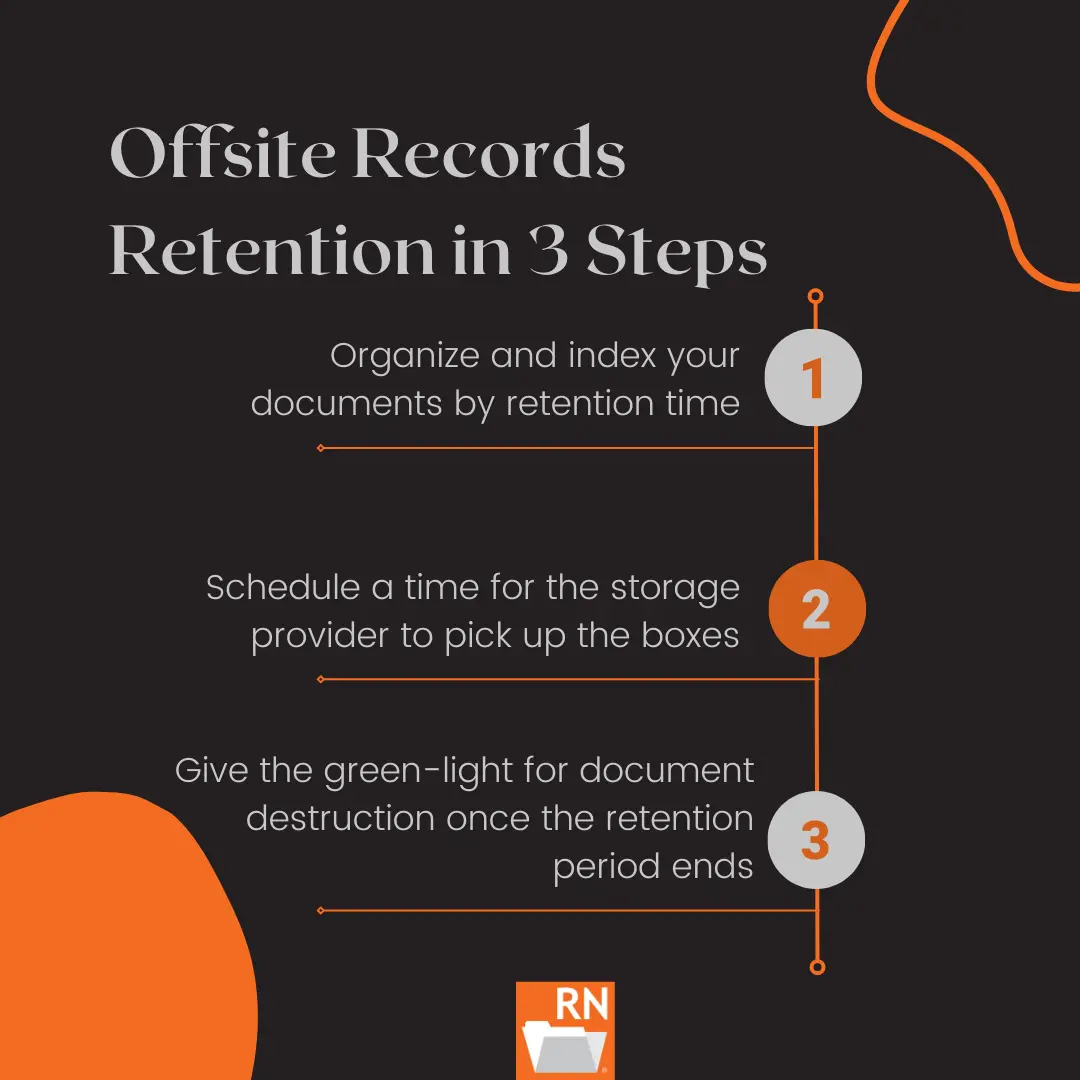
Before your records are stored, they will be indexed using barcodes or RFID tracking. If you take care to organize your records before sending them to a document storage service, tracking and handling retention is a breeze. The process for an offsite records retention program works as follows:
1. Organize By Retention Time
First, organize the records in each box by retention time. Below are some retention requirements for common record types.
| Industry | Type of Record | Retention Period |
| Business Records | – Articles of Incorporation – Bylaws – Capital stock and bond records – Contracts and agreements – Legal correspondence – Minutes | Permanent |
| Financial Records | – Auditor’s reports – Annual financial statements – General ledger – General cash receipts, cash disbursement, and purchase journals | Permanent |
| Financial Records | – Bank debt deduction – Worthless securities | 7 years |
| Financial Records | – Employee payroll records (W-2, W-4, annual earnings records, etc.) – Subsidiary ledgers (accounts payable, accounts receivable, etc.) | 6 years |
| Financial Records | – Bank deposit slips, reconciliations, statements, cancelled checks, interim financial statements, credit memos – Bills of lading, freight bills, invoices (sales and cash register receipts, merchandise purchases, permanent asset purchases) – Contracts (purchase and sales) – Depreciation records, inventory lists – Employee expense reports, petty cash vouchers, payroll journals, time cards and daily time reports – Internal reports (work orders, sales reports, production reports) | 4 years |
| Financial Records | Budgets | 2 years |
| Personnel Records | Patents, copyrights, trademarks, and servicemarks | Permanent |
| Personnel Records | Medical and exposure Records related to toxic substances | 40 years |
| Personnel Records | Personnel accident report/injury claim | 11 years |
| Personnel Records | – OSHA logs – Personnel files | 6 years |
| Personnel Records | Attendance records | 4 years |
| Personnel Records | – COBRA records – OSHA training documentation | 3 years |
| Personnel Records | Employee benefit plans | 2 years |
| Personnel Records | I-9 forms | 1 year |
| Insurance Records | – Safety, accident, and fire inspection reports – Group disability records – Insurance policies | 6 years |
| Insurance Records | Settled insurance claims | 4 years |
| Real Estate Records | Deeds | Permanent |
| Real Estate Records | – Contracts – Mortgages | 6 years |
| Pension/Profit Sharing Records | – Actuarial reports – Associated ledgers and journals – Financial statements – IRS approval letter – Plan and trust agreement | Permanent |
Then, group boxes with similar retention times together. If the boxes are organized properly, the storage provider can make them available on request. Additionally, many storage services will provide both physical and digital delivery of your records.
2. Provider Picks Up Boxes
You can also specify a retention time. The document storage provider will take note of that, and notify you when the retention period is close to expiring. One that happens, you can determine if you still want to hold on to them, or if they can be destroyed.
3. Provider Handles Shredding
The provider will pick up your boxes and transport them to the record storage facility. There, the contents of each box are recorded for easy retrieval later on.
If you make the decision that the records no longer need to be kept, the offsite records facility will take care of the document destruction. Many record storage services have a shred partner or on-site shredding, making the process quick and efficient. This is more secure than other options because your records are stored and destroyed in one place.
After your records are shredded, you will receive a certificate of destruction. This certificate provides details about the shredding and proves that you complied with all records retention requirements.
Need to Use Off-Site Records Retention?
Let us help find the best record storage and retention solution for you. To get started with free, no-obligation quotes on off-site records storage services, fill out the form on the right or give us a call at (866) 385-3706. Within minutes you will receive a custom quote from experts in your area.